100% No Win No Fee

Call free

Spinal Injury Negligence Claims In London

If you’re in London and need spinal injury claim support after medical negligence, our solicitors could help. 

100% No Win No Fee

Living with spinal damage can leave its mark on movements that once took little thought, from getting out of bed to finding that a short walk through your home now takes more effort or requires support. If negligent medical treatment caused avoidable spinal harm or worsened an existing condition, you could be eligible to claim compensation with Medical Negligence Solicitors London. Our solicitors handle spinal injury negligence claims in London on No Win No Fee terms and can draw on extensive legal experience to explain your options for pursuing compensation.

You and your family may still be wondering whether earlier spinal treatment could have made a difference, and we can help you explore that uncertainty more clearly. Years of experience with complex medical negligence cases have taught us that answers are rarely found in one appointment, and that keeping you informed matters just as much as building the case itself. If you feel ready to find out whether you can make a hospital negligence claim, contact our team and let us know if you need communication support or would like a trusted person involved in the conversation.

TrustScore: 4.8 out of 5 1,105 reviews

Excellent

We’re Medical Negligence Solicitors

Trusted by thousands to win compensation

Can I Claim Compensation For Spinal Injury Negligence?

Yes, you can claim compensation for spinal injury negligence if the care you received fell below acceptable standards, causing avoidable spinal damage or making an existing condition worse. Eligibility for spinal injury negligence claims in London depends on showing that:

  • You were owed a duty of care: Healthcare providers, including spinal surgeons and radiologists, must provide care that meets an appropriate professional standard. That is their duty of care to patients, and it applies from the first assessment of symptoms through to spinal imaging and the treatment that follows.
  • That duty was breached: Failures in care can vary when it comes to spinal conditions, but might involve a clinician dismissing signs of nerve compression, or a surgeon placing screws in the wrong position during an operation.
  • The failure caused avoidable harm: The failure must have caused avoidable harm or made your condition worse, and this is where the untreated compression becomes important. If the warning signs were dismissed without further investigation and pressure on the nerves continued, leaving you with lasting mobility loss or permanent neurological damage, that may give you grounds to claim compensation.

Not every poor outcome following spinal treatment means that your care was negligent. Surgery can carry recognised risks even when it is performed properly, and some spinal conditions will continue to progress despite appropriate care. Claims may arise from treatment received through the NHS or from private healthcare in London.

Take the first step towards answers about your spinal treatment. Contact our solicitors today to explore whether you could claim compensation for the avoidable harm you have suffered.

How Could Medical Negligence Cause Spinal Injuries?

Medical negligence could cause spinal injuries by allowing harmful pressure on the spinal cord or nerves to continue untreated, or by causing damage during a procedure. Spinal injury negligence claims may arise where appropriate medical treatment would probably have prevented that damage, which might involve:

Missed diagnosis or delayed treatment:

Failing to arrange an emergency referral and MRI scan when your symptoms pointed toward cauda equina syndrome can critically delay decompression surgery. If that prolonged nerve compression leaves you with permanent loss of bladder and bowel control, or lasting neurological damage that timely treatment would probably have prevented, you could have grounds to claim.

Surgical errors or incorrectly positioned implants:

An avoidable mistake during spinal surgery could injure nearby nerves. For example, a screw placed incorrectly during spinal fusion could press against a nerve and cause weakness in the affected limb.

Failure to recognise postoperative complications:

Bleeding after spinal surgery can form a collection of blood that compresses the nerves. If staff fail to investigate new leg weakness promptly, a delay in further surgery could allow avoidable damage to develop.

These complications can also occur despite appropriate medical treatment. Independent medical experts would need to assess whether the treatment met acceptable standards and whether any failure caused additional harm.

Concerned that a missed opportunity during your treatment changed your recovery? Speak to us today about whether you have grounds to take your claim forward.

How Much Compensation Can I Claim For Spinal Injury Negligence?

The compensation you could claim for spinal injury negligence depends on the additional harm caused by substandard treatment and its effects on your life. There is no fixed award for a spinal diagnosis because its consequences will differ from person to person.

To reflect those individual consequences, your compensation includes general damages. This part of the award compensates for the physical suffering caused by the avoidable spinal damage, including its effect on your enjoyment of life, as well as psychological harm.

Assessments consider the severity of paralysis, such as paraplegia or tetraplegia, and how much independence you have lost. Persistent pain or reduced mobility can also affect the valuation, alongside other neurological consequences. Independent medical evidence helps establish your likely recovery and lasting limitations. 

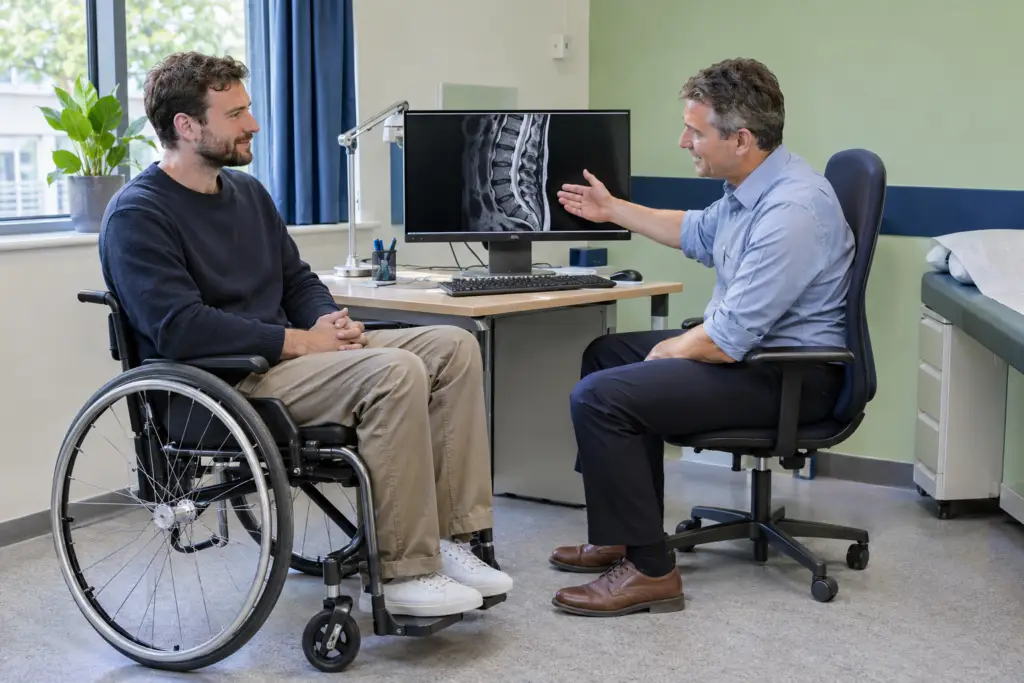
A claimant sees an independent medical expert as part of his spinal injury claim.

To help put a value on these effects, solicitors may refer to the Judicial College Guidelines (JCG). This publication provides guideline compensation brackets for different forms of harm according to their severity. Your medical evidence helps identify which bracket may be relevant to the spinal harm caused by negligent treatment.

The table below provides relevant JCG brackets for spinal damage. The first row is an illustrative overall figure that includes financial losses and does not come from the guidelines. These figures cannot guarantee your award.

HarmDescriptionCompensation guideline
Multiple, severe forms of harm and special damagesMultiple instances of very severe harm, including avoidable spinal damage, along with costs related to lost wages, mobility aids and a visiting nurse.Up to or over £1,000,000
Quadriplegia (tetraplegia)Award will be influenced on what function remains and extent of dependence on others.£428,850 to £533,720
Back: Severe (i)Spinal cord and nerve root damage, causing severe disability and involving incomplete paralysis and significantly impaired bladder and bowel function.£120,340 to £212,670
Back: Severe (ii)Injuries with particular features that increase their severity, such as nerve root damage affecting mobility or bodily functions.£97,980 to £116,820
Back: Severe (iii)Disc injuries or fractures causing chronic symptoms and continuing serious disability despite treatment.£51,230 to £92,130
Back: Moderate (i)Injuries including compression or crush fractures, with substantial ongoing pain and a risk of future problems.£36,680 to £51,230
Back: Moderate (ii)Ligament or muscle damage causing persistent backache, or a prolonged worsening of an existing back condition.£16,520 to £36,680
Neck: Severe (i)Neck injuries associated with incomplete paraplegia or permanent spastic quadriparesis, which causes weakness and stiffness in all four limbs.In the region of £195,970
Neck: Severe (ii)Serious fractures or disc damage causing substantial loss of neck movement or loss of function in one or more limbs.£86,860 to £172,970
Neck: Severe (iii)Fractures, dislocations or severe soft tissue damage causing chronic symptoms and significant permanent disability.£60,080 to £73,970

What Costs Could Spinal Injury Compensation Cover?

Lost earnings and the expense of neurorehabilitation are some of the costs that spinal injury compensation could cover if they result from the avoidable harm you suffered. Such losses fall under special damages, and each cost must be supported by evidence showing what you have already spent or are likely to need in the future.

Besides the impact on your earnings, you may also be able to recover costs such as:

  • Specialist rehabilitation: Relearning how to move after spinal cord damage can take time once everyday movement stops feeling automatic, and that may mean paying for neurophysiotherapy to rebuild control. Occupational therapy may also be needed to adapt everyday activities around any lasting limitations, and the cost of that rehabilitation can be considered.
  • Care and personal support: Losing enough lower-body control to need assistance with washing or dressing may make paid care part of everyday life, while the support of relatives can also be valued. Bladder or bowel dysfunction can bring its own ongoing expense if you need continence supplies, adding to the practical cost of managing your condition day to day.
  • Equipment and accessible housing: Coming home with reduced strength or control in your legs can make upstairs access difficult without substantial changes to the property. Converting part of the ground floor may become necessary, while mobility equipment or a ceiling-track hoist can add further expense if moving around the home or transferring between bed and chair cannot be managed unaided.

Receipts and invoices can show expenditure already incurred. Care diaries can record help provided by relatives, while payslips support lost earnings. Expert assessments and cost estimates may substantiate future support needs.

Could I Receive Interim Compensation Payments?

Yes, you could receive interim compensation payments during a spinal injury negligence claim if there is an admission of liability or if the court is satisfied that you would be likely to recover a substantial amount at trial. These payments provide an advance on your final settlement, but they are not guaranteed.

An interim payment could help fund urgent spinal rehabilitation or necessary equipment. Depending on the circumstances, it might also contribute towards care or accessible accommodation while your claim continues.

Your compensation should reflect what spinal damage means for your future. Get in touch with us to discuss your support needs and see which financial losses your claim could address.

What Evidence Is Needed For Spinal Injury Negligence Claims In London?

MRI or CT imaging and clinical notes recording neurological symptoms are key forms of evidence needed for spinal injury negligence claims in London. Taken together, your medical records and other material can establish whether your care fell below appropriate standards and whether the harm that followed was avoidable rather than simply part of your underlying spinal condition.

Relevant evidence may include:

Scans showing the spinal damage:

MRI or CT images can reveal pressure on the spinal cord or nerves. The accompanying radiology reports may explain the findings, and comparisons with later scans could help identify deterioration.

Records explaining the treatment timeline:

A&E notes and neurological assessments document your symptoms. Referral records can then show how quickly you reached specialist treatment. If surgery took place, operation notes explain the procedure, while postoperative records show how staff monitored and responded to changes in your condition.

Independent medical evidence:

Medical experts can assess whether earlier intervention would probably have prevented additional damage. Rehabilitation assessments can help explain how that damage affects your daily life and what support you may need.

Hospital records can feel comprehensive until you are trying to work out whether they really show what went wrong with your spinal care. If your documentation still feels incomplete, talk it through with our team and we can identify what may be missing before explaining how we could obtain what your claim needs.

How Long Do You Have To Start A Spinal Injury Negligence Claim?

You generally have 3 years to start a spinal injury negligence claim, running from the date of negligent treatment or your date of knowledge, if later. For spinal injury negligence claims, the date of knowledge broadly means when you first knew, or could reasonably have known, that the harm you suffered was potentially linked to the care you received.

For children, the 3-year period usually begins on their 18th birthday, giving them until 21 to issue proceedings. Before then, a suitable adult, often a parent, can pursue the claim as their litigation friend.

If someone lacked the mental capacity to claim when the relevant time limit would otherwise begin, it remains paused while that incapacity continues. A suitable litigation friend can manage proceedings on their behalf during this time, but it’s important to keep in mind that physical disability alone does not establish a lack of mental capacity.

Unsure when the clock started running in your case? Speak with us today and we’ll guide you through how the timing applies to what happened and what that could mean for the time you have left to claim.

How Could Medical Negligence Solicitors London Help Me To Claim?

Medical Negligence Solicitors London could help you claim by investigating whether medical failings caused additional spinal damage and pursuing compensation for its consequences. Our solicitors handling spinal injury negligence claims in London could tailor their support around your rehabilitation, so the legal process is more manageable for you and your family. If you have an eligible claim, we can help by:
  • Identifying the right expertise: Missed signs of spinal cord compression raise a different medical question from improper surgical techniques, so the expert evidence needs to fit the issue at the heart of the claim. That is why we aim to identify a spinal surgeon or another suitably qualified independent clinician whose expertise is appropriate to the care being examined.
  • Making the claim accessible to you: Travelling across London should not make it harder to stay involved in your claim when longer journeys already take more planning, so we can arrange appointments around what works for you and use remote consultations when appropriate.
  • Negotiating compensation for your future needs: Needing less assistance moving from bed to chair can mark real progress without meaning your spinal function has fully returned, and we’ll keep the long-term impact on your independence and care needs central to settlement discussions.
Put your concerns about spinal treatment into the hands of our solicitors. Contact Medical Negligence Solicitors London today and find out how we could help you move your claim forward.

No Win No Fee Spinal Injury Negligence Claims In London

Eligible clients could pursue No Win No Fee spinal injury negligence claims in London with our solicitors under a Conditional Fee Agreement (CFA). This arrangement allows you to obtain legal representation without paying upfront for our solicitors’ work that is covered by the agreement. These service fees, as they are known, are also not payable during the claim itself or if it is unsuccessful.

If your claim succeeds, a success fee is deducted from your compensation as a percentage, subject to a legal cap. Before you decide, our solicitors will explain everything you need to know about the CFA.

Speak To Our Team About Spinal Injury Negligence In London

Speaking to our team about spinal injury negligence in London could help you understand whether you have grounds to claim compensation and how your future needs could be reflected in it. We recognise that permanent neurological damage can change everyday life, and uncertainty about how to afford ongoing support can make those changes harder to face.

If you are also unsure whether your treatment contributed to the damage, you do not need to resolve that question before contacting us. Tell our solicitors what happened in your own words, and we can explain how your concerns could be investigated and what pursuing a claim would involve.

TrustScore: 4.8 out of 5 1,105 reviews

Excellent

We’re Medical Negligence Solicitors

Trusted by thousands to win compensation

More Information

Here are a few more guides from Medical Negligence Solicitors London:

  • Hospital negligence claims explains how patients could claim compensation for avoidable harm caused by substandard hospital treatment.
  • Medication error claims provides guidance on claiming compensation where a medication mistake caused additional harm.
  • Birth injury claims explores how families could pursue compensation for birth injuries caused by negligent medical treatment.

These external websites could help you:

Start a conversation today by contacting our team to learn more about how spinal injury negligence claims in London work and explore your legal options in confidence.